Beautiful pictures, lots of luxury, lots of emotions and enormous success in crypto trading – that’s the common scam scheme
Target persons (victim profile)
- Loneliness or emotional vulnerability
- Trustworthy, helpful, often educated
- Technically not very deep into cryptocurrencies
- Open to new acquaintances or advice

Warning signals in the case of the victim
- Intensive bonding in a short time
- Self-promotion as an experienced crypto investor without losses
- One-sided knowledge transfer with gentle pressure (“You can trust me”)
- Invitation to platforms or “guidance” without professional examination
Classic fraud scheme for crypto fraud
| Phase | Tactics | Aim |
| Contact us | Platforms such as LinkedIn, Facebook, WhatsApp | Entry via a professional-serious environment |
| Relationship building | Emotional conversations, empathy, similar values | Building trust, emotional connection |
| Show competence | Mention of wealth, investments, experts | Create an impression of seriousness & success |
| Introducing crypto | Platform suggestions (often fake sites, e.g. fake Coinbase) | Entry into “investments”, attracting first money |
| Manipulative reinforcement | Promises for the future (“when we see each other”, “you are important”) | Emotional dependency, reduction of skepticism |
| Money transfer | “I’ll help you invest”, “transfer to this wallet” | Victim makes a bank transfer to the fraudster’s address |
| Skimming and Breaking off contact | Promised profits never come, contact suddenly breaks off | Total loss |
CHECKLIST FOR PREVENTING crypto fraud
If the fraud has already happened

- Do not make any further transfers
- Write down wallet address & save screenshots
- File a complaint with the police / criminal complaint through a lawyer (WPC will be happy to put you in touch with IT lawyers)
- Report the platform if the contact took place there (e.g. LinkedIn)
How to successfully track Bitcoin and Ethereum transactions
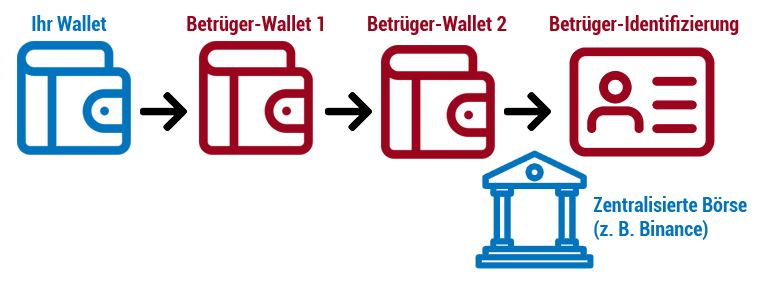
When fraudsters steal cryptocurrencies such as Bitcoin or Ethereum, they leave a traceable trail on the blockchain. Our team of experts carefully analyzes this trail step by step: from your wallet to the various recipient addresses of the perpetrators to large trading platforms such as Binance or Kraken.
Identity checks (KYC – “Know Your Customer”) apply there, where the fraudsters have to identify themselves. This is precisely the point we exploit: Working closely with specialist lawyers and the authorities, we can establish the identity of the perpetrators and help to secure the stolen assets.